



Paint hook 2 x 100 mm square plan CE 20/20
Choose your option
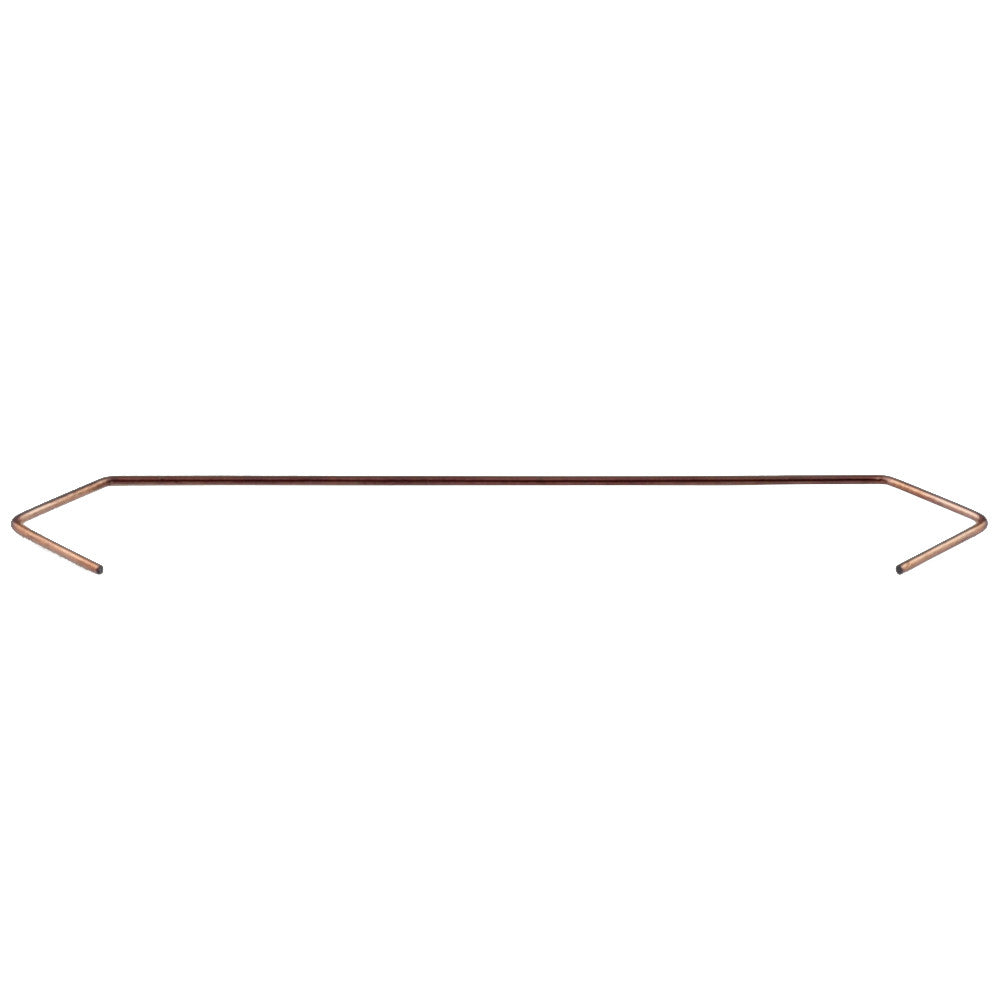
Paint hook 1,5 x 150 mm square plan CE 20/20
Choose your option


Special Rim Hanging
Choose your option
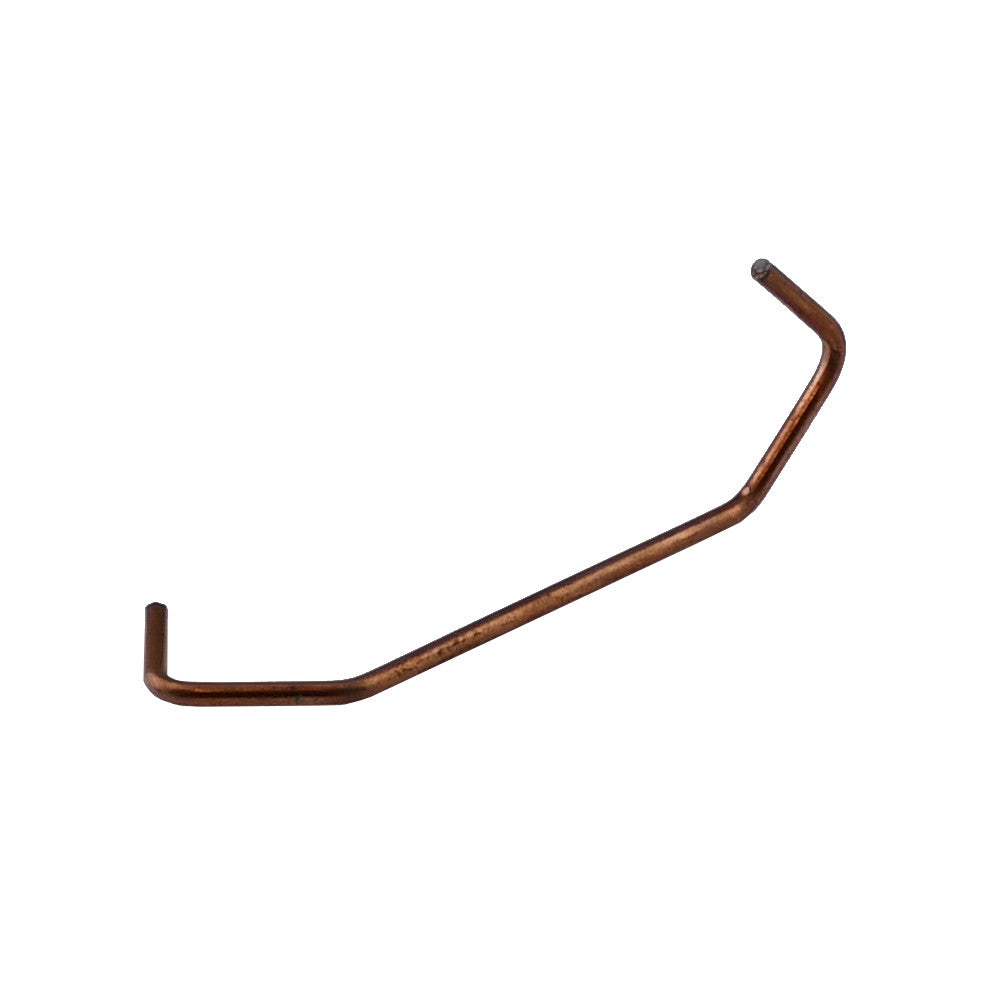
Paint hook 3 x 100 mm square 90° twisted
Choose your option

Paint hook 1,5 x 60 mm square plan CE 20/20
Choose your option
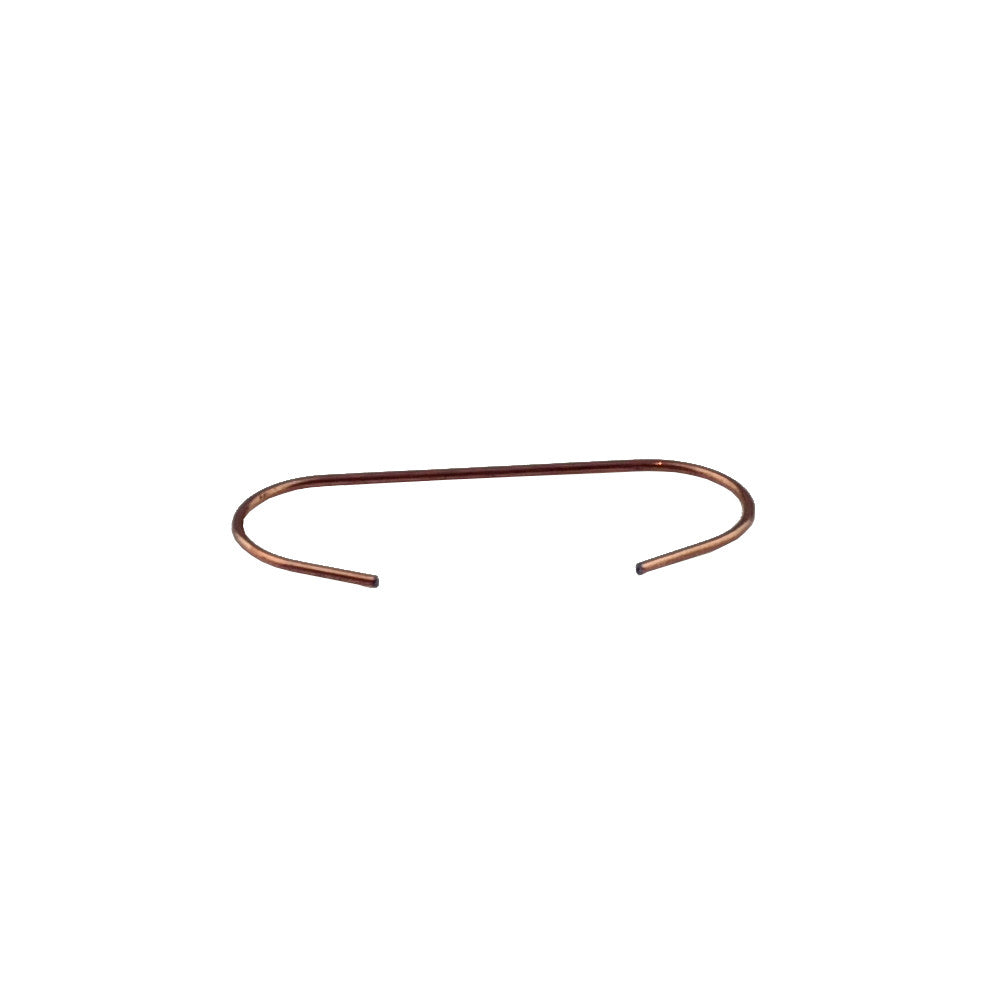
Paint hook 1,5 x 60 mm round plan
Choose your option
Why the Hook Dictates Grounding, Not Just Hanging
A masking hook does not simply hold the workpiece in the booth, it grounds the electrical charge. During application, the powder is electrostatically charged and deposits exclusively on a properly grounded component. This grounding functions directly through the contact points on the hook and hanging system. If a layer of paint already coats this contact area, grounding is interrupted, causing the powder to adhere poorly or unevenly. Consequently, the hook is a vital process component, not merely a handling accessory.
The masking hooks from Pulverkönig are made of copper-plated steel. The copper layer guarantees excellent electrical conductivity at the contact point, ensuring reliable discharge. Make sure the contact surface between the hook and the workpiece remains bare metal, as this is where grounding is actually established. When applying powder coatings containing aluminum pigments, proper grounding is not just a quality requirement, it is mandatory because aluminum pigment dust is combustible.
Expert Opinion by Pulverkönig
In practice, we encounter most adhesion issues not with the powder itself, but with coated hooks. A hook covered in thick leftover paint barely conducts electricity, causing powder to simply drop off near the contact point. Keeping hooks clean or replacing them on time eliminates half of all troubleshooting efforts.
How to Choose Wire Diameter and Shape Based on Weight and Hanging Point
The most crucial specification when selecting a hook is the wire diameter, as it dictates load capacity. Choose the hook based on the weight of the workpiece and the size of the hanging point. A thinner wire hook fits into small boreholes but carries less weight. A thicker wire hook supports heavy components but requires a correspondingly larger hanging point.
| Wire Diameter | Load Capacity | Length | Application |
|---|---|---|---|
| 1.5 mm | up to 4 kg | 60 to 150 mm | small parts, small boreholes |
| 2 mm | up to 7 kg | 100 mm | medium components |
| 3 mm | up to 18 kg | 100 mm | heavy parts, large hanging points |
These specifications serve as a general guide and are provided without warranty. If working near load limits, select the next wire diameter size up. Beyond wire thickness, the geometry determines the application: square flat hooks grip inside boreholes, while 90° twisted variations like the masking hook 3 x 100 mm square 90° twisted alter the hanging orientation of the component.
For small attachment points on lightweight parts, a masking hook with 1.5 mm wire supporting up to approximately 4 kg is sufficient.
Hanging Rims Securely Without Leaving Uncoated Marks at the Valve
When coating a rim, a typical uncoated mark usually occurs right where the component hangs from the hook. No powder accumulates at the contact point, leaving a small uncoated spot after curing. The rim hanging hook solves this through its specific attachment design: it fits into any standard air valve, holding the rim securely while shifting the inevitable contact mark inside the valve stem, where it remains hidden from view later. Constructed from galvanized steel, the hook is 70 mm long and accommodates automotive, motorcycle, and bicycle wheels.
Particularly in wheel coating, reaching recessed areas plays a significant role. With the tribo charging process, where the powder charges by friction inside the barrel rather than via high voltage, shielding field lines do not form. This allows powder to penetrate deep spokes and interior regions far better, avoiding the Faraday cage effect that blocks powder during high-voltage application. The Faraday cage refers to shielded inner corners that high-voltage electrical fields cannot penetrate. When powder coating a rim yourself, hanging, grounding, and application methods all work in tandem.
Maintain Hook Conductive Cleanliness Instead of Throwing Them Away
Masking hooks are consumables, but they are not single-use items. Over multiple cycles, paint accumulates, especially at contact points. As soon as grounding breaks down, coating results become uneven. You have two options: replace the hooks or strip the old coating. Cured powder coats can be removed chemically in immersion baths, thermally in pyrolysis ovens, or through abrasive blasting, restoring conductivity to hangers and hooks.
A quick inspection before every pass helps: check the contact point. If it shows bare metal, grounding is intact. If heavily coated with paint, the hook needs cleaning or replacement. Small contact marks on the finished part (so-called hook marks) can easily be touched up with a touch-up pen mixed with original powder for precise color matching.
Where the Hook Fits into the Workflow
Hanging is a fixed step sandwiched between surface preparation and coating application. Following cleaning and masking, the workpiece is hung, coated, and moved into the oven while remaining suspended. Because the part stays on the hook throughout the entire process, the hanging setup must be secure from the start and must not yield under curing heat.
A clean process relies on the right complementary accessories. Seal openings and threads that must remain free of powder prior to application using conical silicone plugs, which remain temperature-stable up to 315 °C.
Mask off edges and surfaces for two-tone effects using heat-resistant tape.
If you are just setting up your equipment, you can find suitable units under powder guns and curing ovens.
Our DIY powder coating guide provides a comprehensive step-by-step overview.