

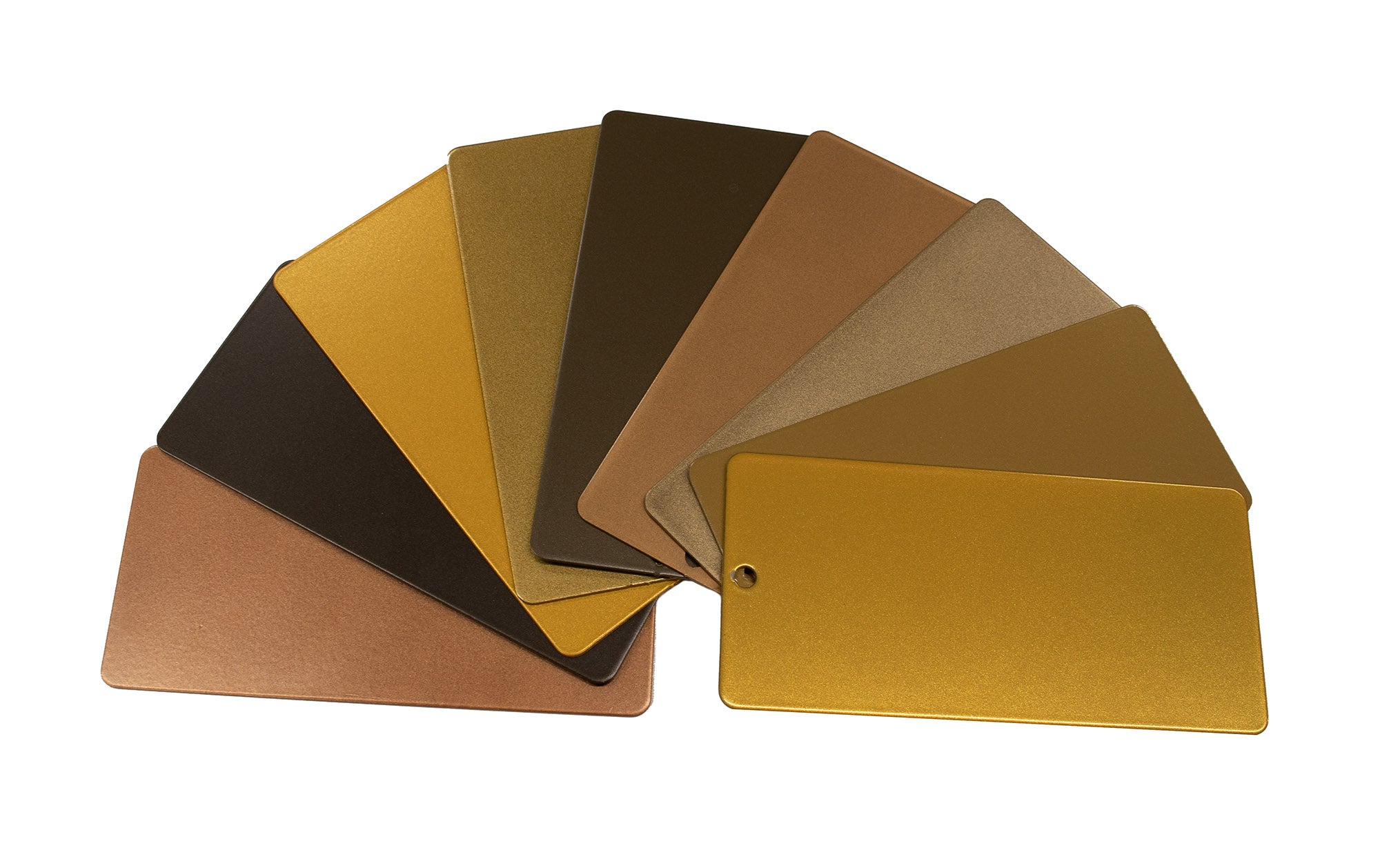
Swatch Set Gold and more 10x
Choose your option
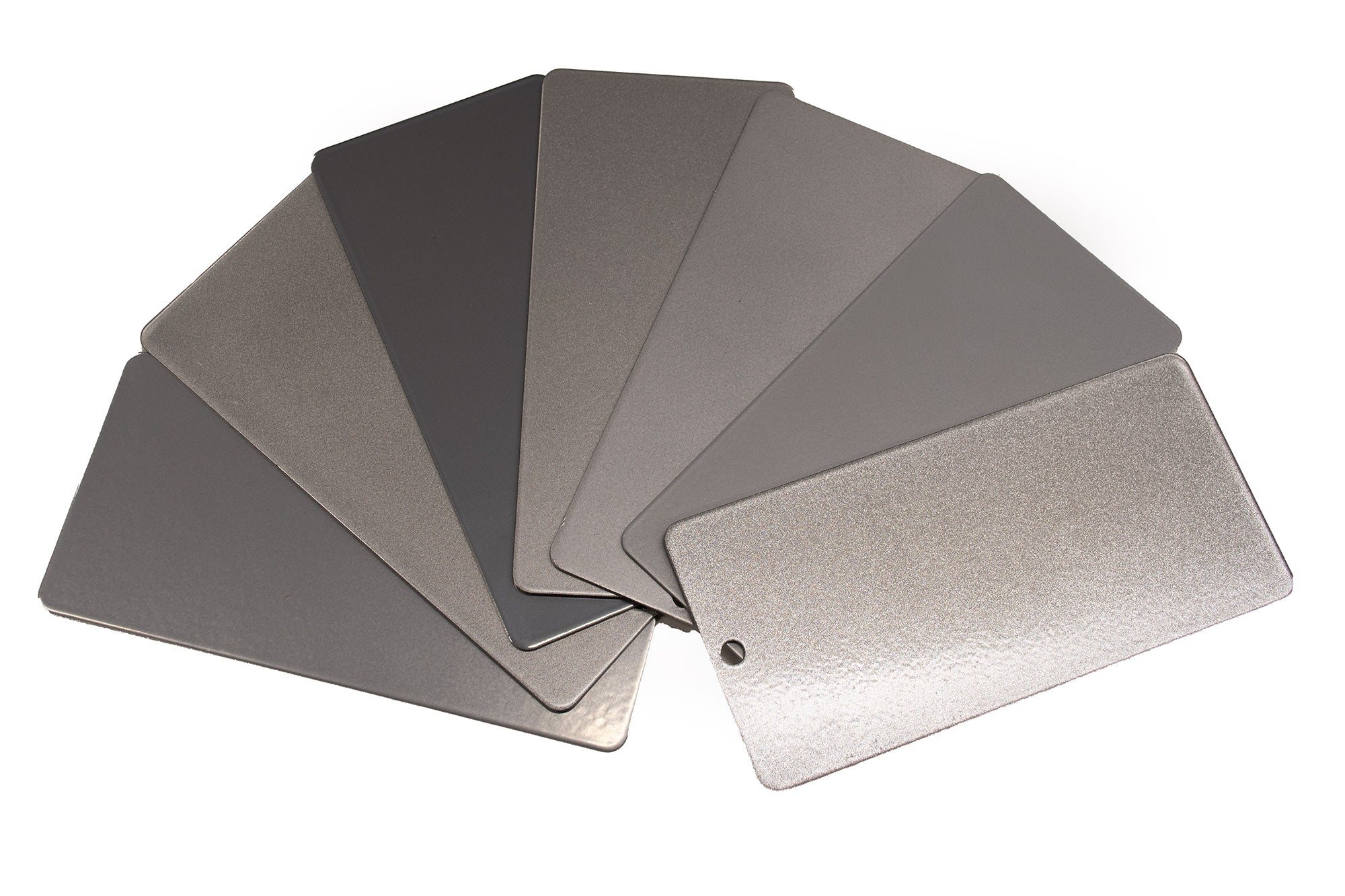
Swatch Set Silver Metallic 7x
Choose your option
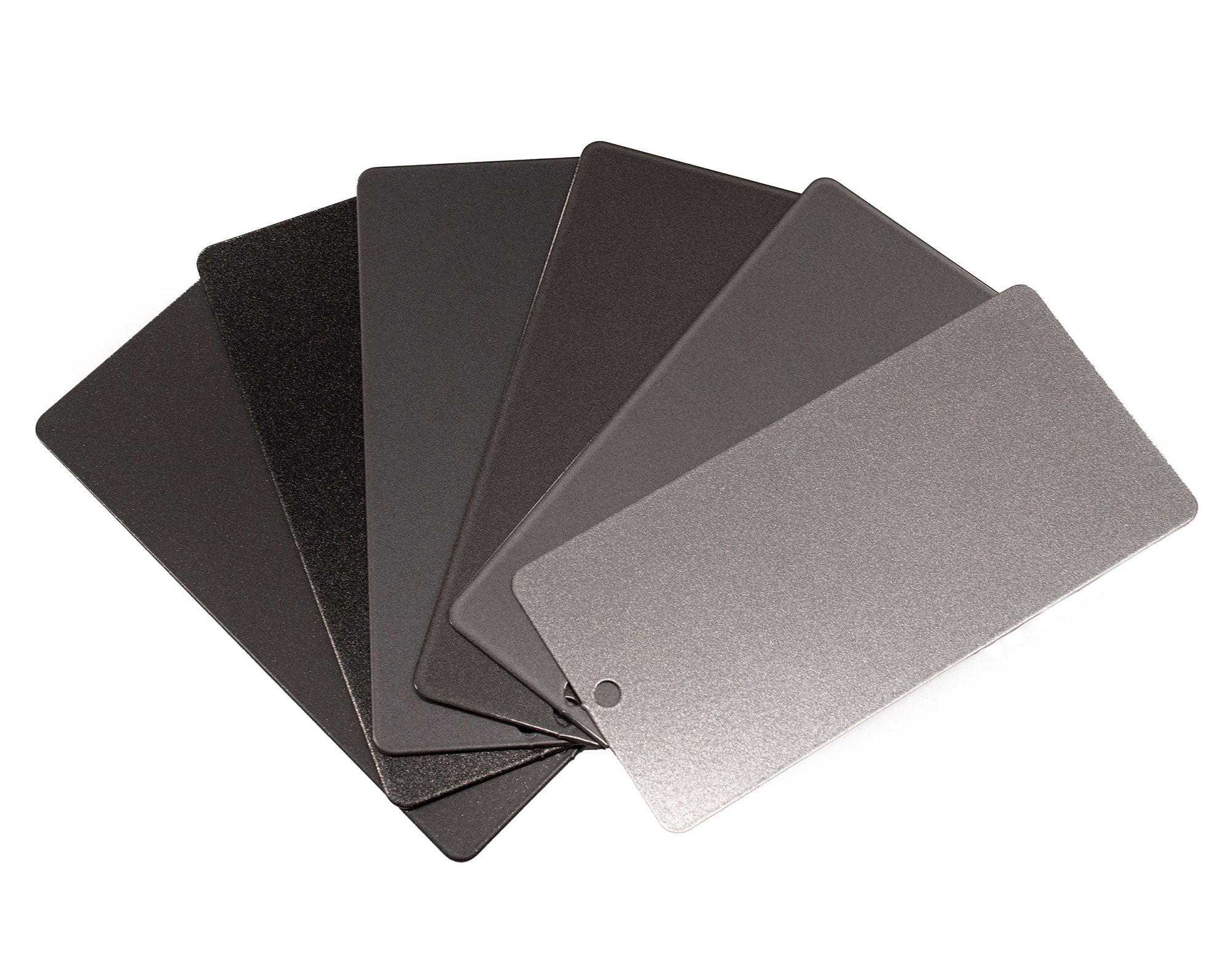
Swatch Set Grey Metallic 6x
Choose your option
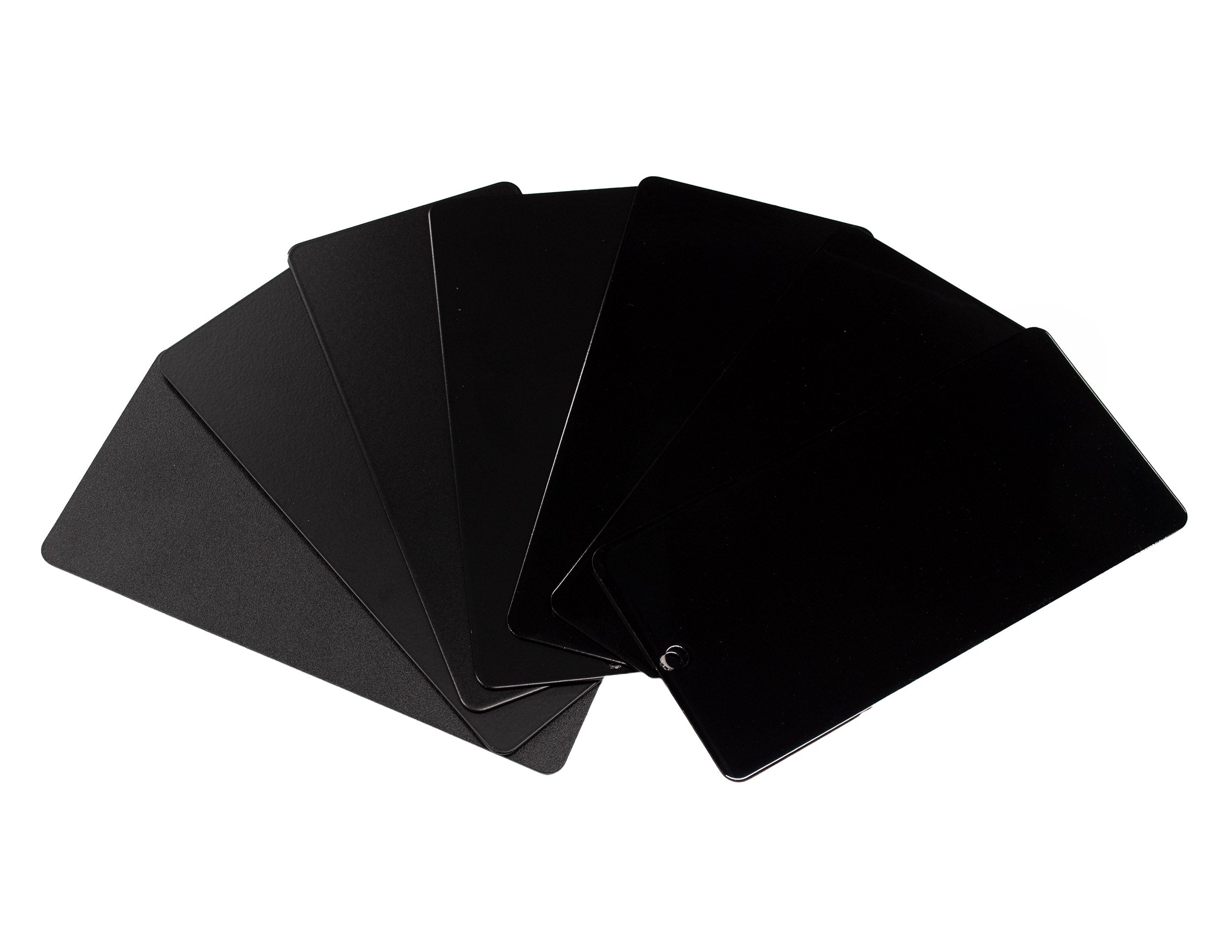
Swatch Set Black 7x
Choose your option


Color Sample Blanks (Set of 5) – Uncoated
Choose your option


RAL Color Fan K1 | 213 RAL-Colors
Choose your option


Color Sample Blanks (Set of 3) – Uncoated
Choose your option


Color Sample Blanks (1 Pcs) – Uncoated
Choose your option
Why a Screen Cannot Display the True Color Tone
You select a color shade on a monitor or reference a RAL color fan, yet after baking, the coated part looks different. This is due to the process itself: the final tone only forms once the powder coating melts and cures. If the specified object temperature—the temperature of the component itself—is significantly exceeded during baking, the color tone will shift further. A sample panel removes this guesswork by displaying the exact, fully cured finish.
A color sample is a powder-coated metal sheet, typically made of steel, measuring approximately 20 x 10 cm and ranging from 1 to 3 mm in thickness depending on the set. You can evaluate color tone, gloss level, and surface texture side-by-side in natural daylight rather than as pixels. For a single standard RAL shade, checking directly against your component often suffices, but for specialty colors, using a sample panel is almost always worth the investment.
| Sample Set | Panels | Color Range |
|---|---|---|
| Gold, Bronze, Copper | 10 | Gold and bronze metallic |
| Silver, Chrome | 7 | Silver and chrome metallic |
| Gray, Anthracite | 6 | Dark metallic grays |
| Black | 7 | RAL 9005 across all gloss levels |
| Blank Panels | 5 | Uncoated, for custom test coatings |
The four bundled sets cover the color categories where selection errors occur most frequently, while the fifth set is deliberately left blank for your own test coatings.
Metallic and Effect Shades Require a Real Metal Panel
With metallic shades, the RAL number serves only as a benchmark, not an exact specification. The effect is produced by flake-shaped pigments whose appearance varies based on light angle, film thickness, and application; for this reason, we always recommend verifying the color on a cured metal panel before starting production. If you are comparing multiple metallic shades, ordering a sample bundle helps prevent costly misorders.
This is even more pronounced with glazes. A glaze is a translucent, tinted coating applied over a reflective chrome or silver substrate to create a Candy effect—delivering rich visual depth. Color intensity depends heavily on coat thickness: a difference of just ~20 µm can visibly alter the final shade. If you want to achieve a precise target look, a physical sample panel is essential; you can browse our range of translucent glazes to get an impression of the achievable tones.
Expert Opinion from Pulverkönig
In customer consultations, we repeatedly see that Candy and glaze shades look vastly different on a physical panel than on a monitor. A difference of just around 20 µm in film thickness alters the color tone, which is why we advise reviewing a physical sample for effect and glaze colors before coating wheels or production parts.
When selecting bundled metallic samples, paying attention to manufacturing quality pays off. Homogeneous, reproducible effects are produced using a bonding process, where effect pigments are permanently fused to the powder grains to prevent segregation; effect pigment content typically ranges between 1 and 6 percent. This allows you to compare options like silver and chrome shades side-by-side as a bundle rather than ordering them individually.
One durability factor to keep in mind: bright silver and chrome surfaces are susceptible to scratching. To preserve their appearance long-term, these effect coatings should be sealed with a clear coat. Be mindful of the aesthetic compromise involved: applying clear coat over true mirror chrome places a subtle silver haze over the mirror finish. When in doubt, test this combination on a sample panel first.
Not All Black Is the Same: Compare Gloss Levels and Textures
Jet black can look like an entirely different shade depending on the gloss level you apply. Gloss is measured in gloss units (GU), with a polished black glass standard defined as 100 GU. The visual difference between high gloss and fine texture is immense, and a black sample set illustrates this entire spectrum: seven panels showcase RAL 9005 Jet Black across every gloss level, from high gloss to fine texture, allowing you to compare all gloss levels of Jet Black in your hands.
| Gloss Level | Gloss Units | Visual Effect | Application |
|---|---|---|---|
| High Gloss | 80 to 95 GU | Highly reflective | Smooth surfaces in prime condition |
| Semi-Gloss | 60 GU ±10 | Subtle shine | Balanced, versatile finish |
| Satin Gloss | 40 GU ±10 | Restrained | Easy care, more scratch-resistant |
| Matt | 25 GU ±10 | Diffuse, velvety | Slightly textured surfaces |
The lower the gloss level, the less reflective and more discreet the surface appears—though ultra-matt finishes tend to be somewhat more sensitive to scratching. For an elegant, subtly shimmering finish, many choose RAL 9005 Jet Black in Satin Gloss.
Expert Opinion from Pulverkönig
Experience shows that the choice of gloss level often impacts the final look more than the color tone itself. Holding a high-gloss sample at ~80–95 GU next to a fine-texture sample at under 10 GU on the same panel clearly demonstrates this difference.